Back
UI/UX

Point of Sale Redesign

From slow MVP to fast, scalable Android experience

Client Overview

I was brought in as a freelance UI/UX consultant to redesign a POS system used by a wide range of small and medium-sized businesses. The client wanted to evolve the product from a basic, web-based tool into a fast, scalable Android application that could support retail shops, cafés, small grocery stores, and boutique businesses.

The project focused on restructuring confusing workflows, improving speed, and building a flexible interface that could scale with new features and business types.

CLIENT

Verifone (Israel)

YEAR

2025

ROLE

UI/UX Design Consultant

Challenge

The existing POS MVP was functional but limited. It was built on a desktop-web foundation, which caused slow loading times, inconsistent performance, and friction during peak usage. Since the system was created by different individuals over time, the UI felt inconsistent and off-brand.

Key problems identified:
Slow performance due to web-based infrastructure
Confusing user flows that didn’t match real cashier behaviour
Missing core POS features like returns, tipping, and item-level discounts
Manual workarounds for tasks such as voucher creation
A fragmented UI without a clear visual language
Not optimized for busy environments where speed and clarity matter
The client wanted to launch a stronger version on Android, reduce training time, and scale the product to support multiple business types.

Research

To understand how the system was used in real environments, I conducted interviews with staff from several business categories.
Their feedback consistently aligned with the issues we found during the audit:
Many actions weren’t visible or discoverable
Tasks took too long due to slow response times
Workflows were unpredictable or unclear
New employees needed excessive training
Missing features forced staff to find manual workarounds
These insights guided a complete re-thinking of the system structure.

Design Process

I mapped all existing flows and highlighted friction points. The redesign focused on the most critical day-to-day processes:

Returns
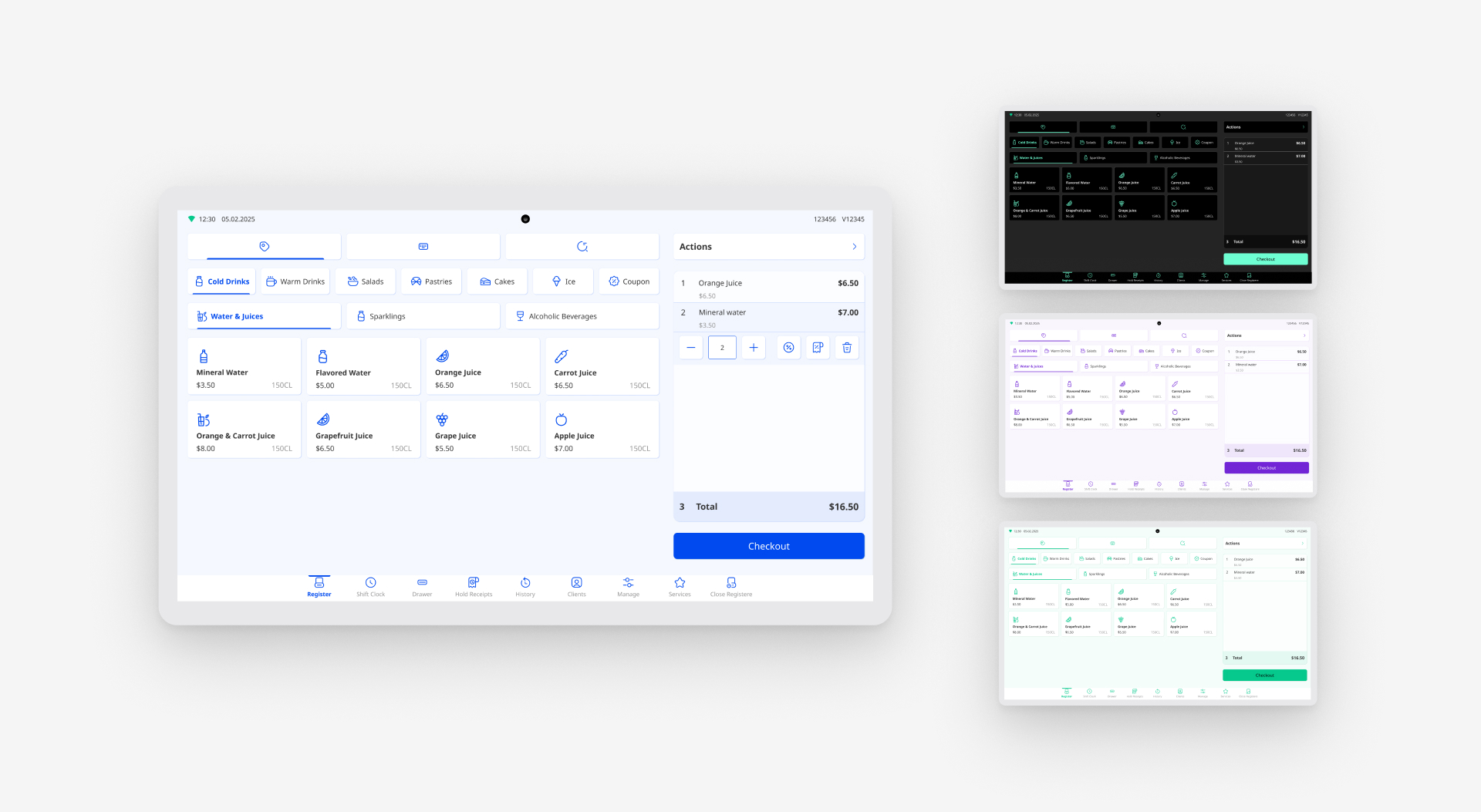
Checkout
Inventory
Product search
Order management
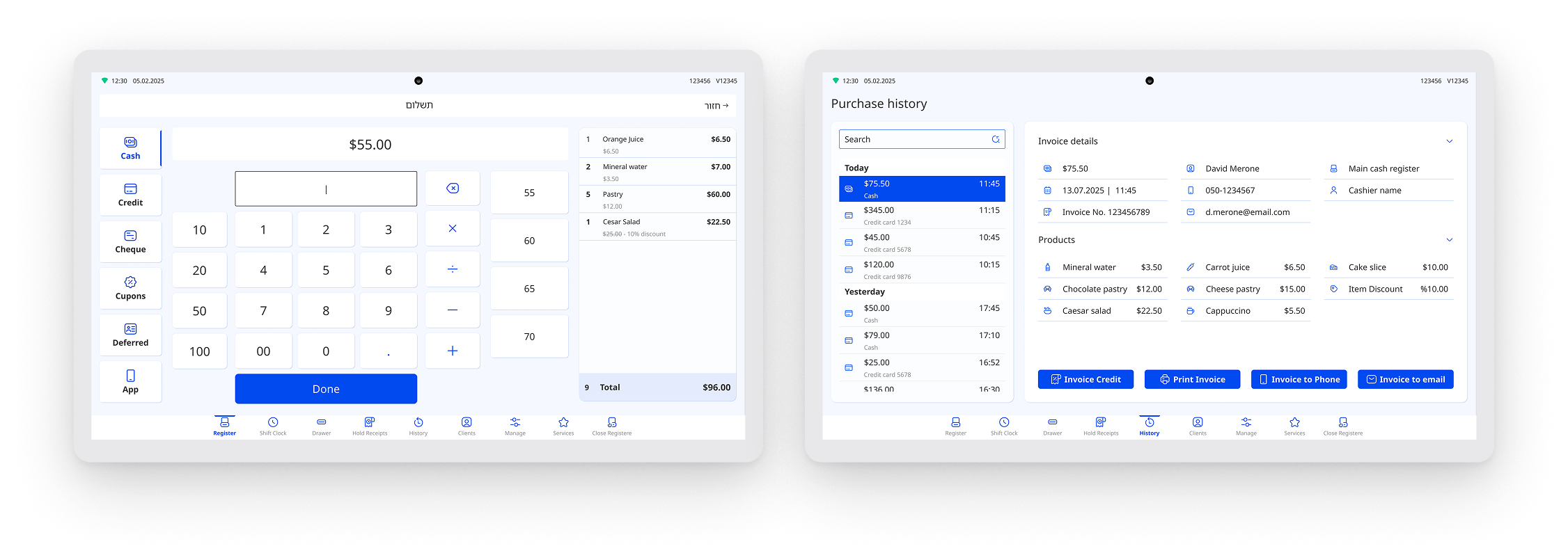
Payment handling
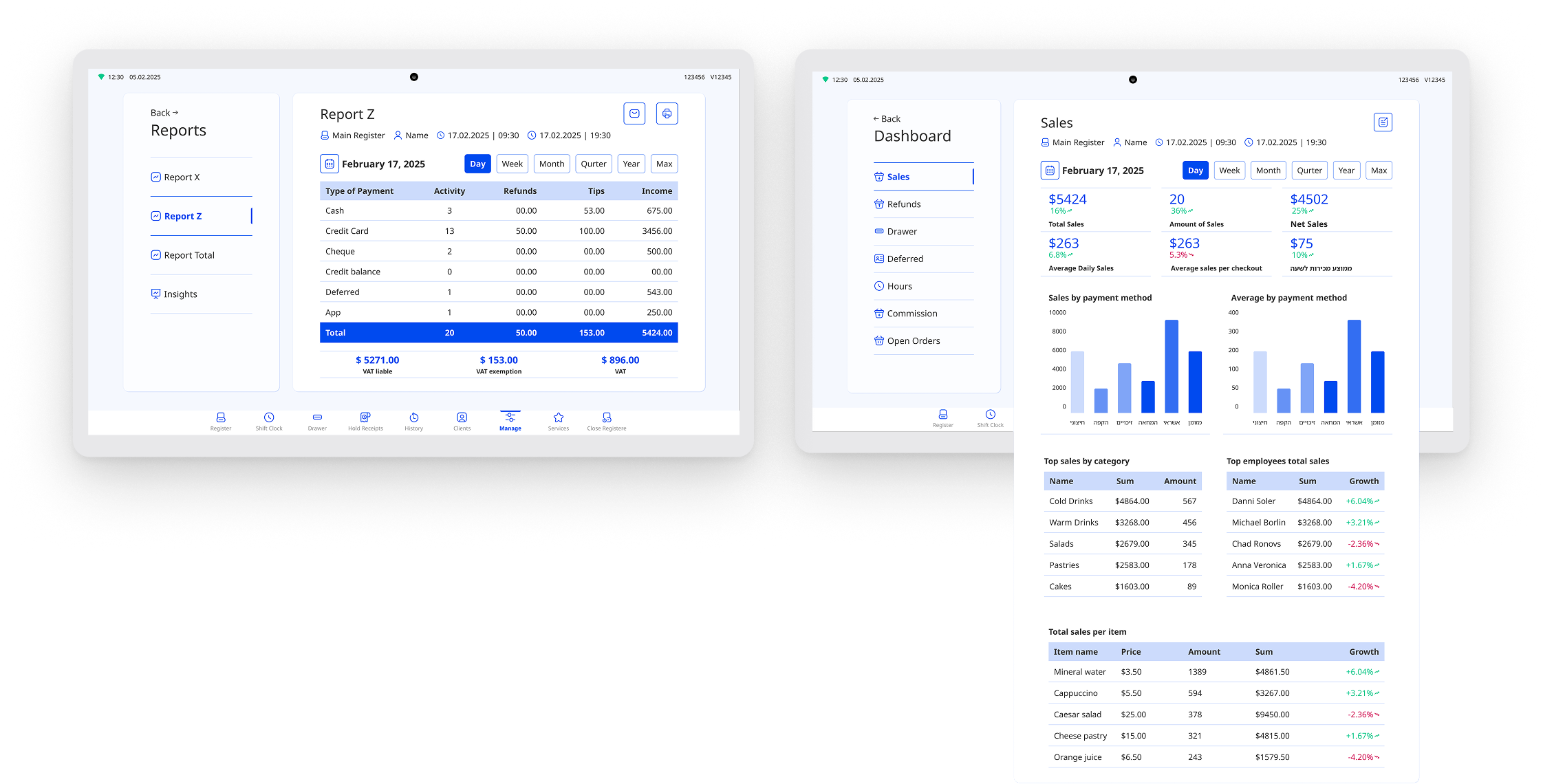
Reports

simplified the steps, improved hierarchy, and reduced the number of repeated actions. Information was grouped more logically so cashiers could find what they needed quickly.

Several missing features were added to increase flexibility and match real business needs:

Returns
Tipping
More flexible product variations
Clearer order history and reporting
Theme and color adjustments
Dark mode
Item-level discounts
The redesign moved the product from web-based performance to Android. I adapted the system to Android Material guidelines to ensure reliability and faster interaction patterns. This shift also helped the engineering team ship updates more efficiently.

I introduced small but meaningful micro-interactions:

Subtle icon animations to signal clickability
Smooth transitions between steps
Visual confirmation states for success or error

These moments helped make the system friendlier and easier to learn.

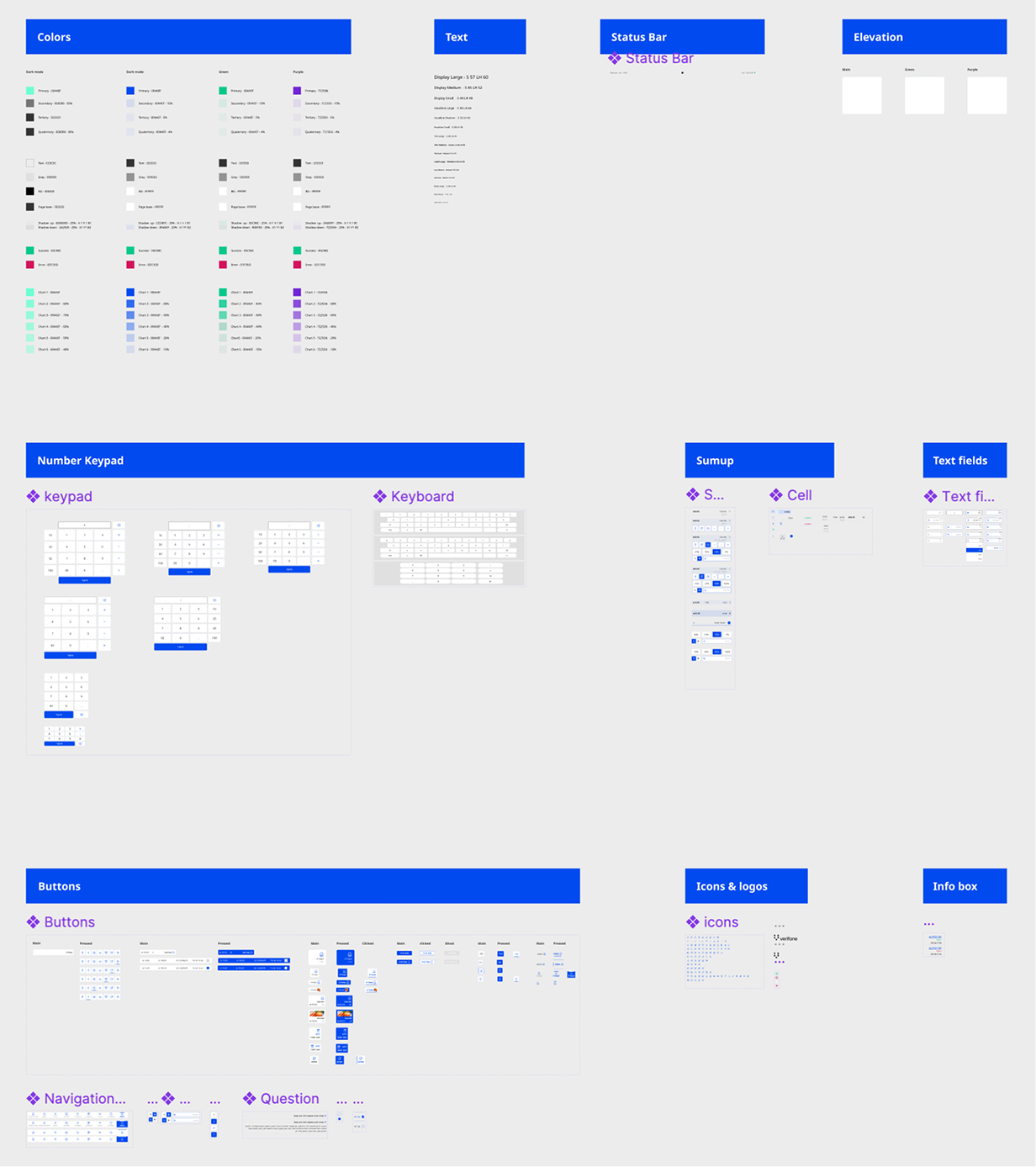
To support long-term scalability, I built a small but robust component library:

Structured navigation components
Reusable modal patterns that could adapt to different business types
Standardized forms
Android-based text styles
Color and theme variations

This allowed the engineering team to maintain consistency and ship updates faster.
I introduced small but meaningful micro-interactions:
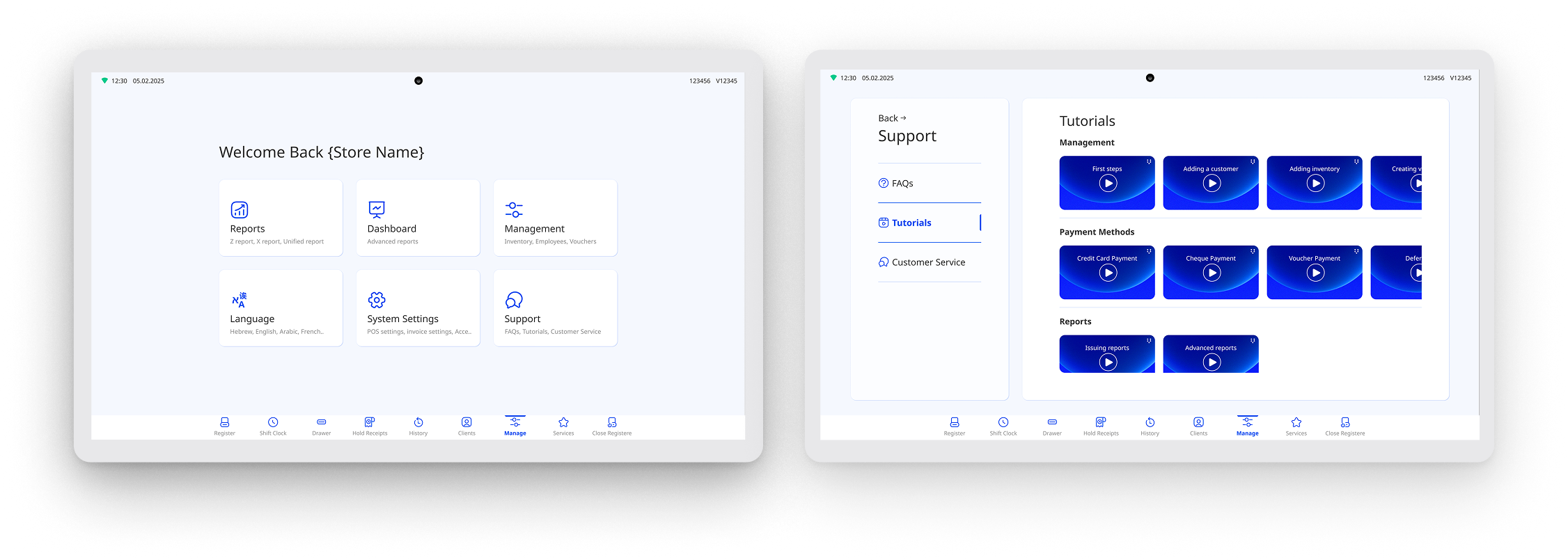
UX & workflow redesign
Wireframes for core flows
High-fidelity UI design
Interactive prototype
Motion and micro-interaction specs
Android-ready component library
Dark mode and theme variations

Results

The redesigned POS delivered a fast, clear, and scalable Android experience:
Streamlined workflows that matched real cashier behavior
Clean, consistent UI aligned with brand guidelines
Faster checkout and fewer user errors
A system flexible enough for different business types
Android-native performance and interaction patterns
Reduced reliance on customer support

Interested in working together?

Let's discuss how I can help with your next project.